
Disappearing players and holographic brass
Disappearing players
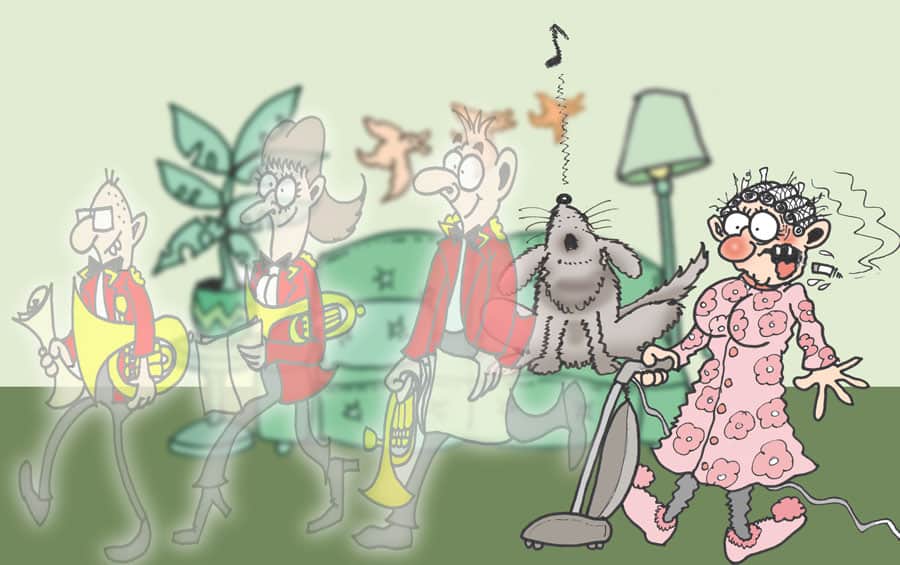
Back in the day, and by that I mean 30 years ago, a conductor could quite safely give a wayward brass band player the heave-ho without having to worry about a replacement. There were players galore, literally growing on trees, and the maestro only had to sneeze and a car would screech to a halt outside the band room and the next conductor’s victim would step out panting… “I’ll be your dog!” So where did it all go wrong?
Rewinding back to the mid-nineties, there was no internet and social media was just a horrific, distant vision. Three or four channels on the TV were your Pixie Lott, and smartphones were something only found on Star Trek, leaving thousands of us scratching our heads for something to do after work other than boldly go to the pub, bingo or the local tea dance. Brass banding was a religious experience, not just a hobby that one could dodge in and out of.
Today, band folk with no conscience or spinal fortitude flit off to another new shiny band before the ink has dried on their current registration card. Some players believe it’s perfectly acceptable to jump ship without warning, leaving the band in the lurch, and as we all know, finding a replacement player quickly is like trying to find an honest politician who hasn’t partied with Jeffrey Epstein.
So how has it come to this? Years ago the younger generation didn’t think twice about venturing outside their homes, and they actually talked to each other face to face. Now, most kids sit in their bedrooms watching the world through virtual eyes, with virtual friends. This won’t change, so we need to create virtual bands. Sounds nuts? Think about Covid – that awful time when bands did online collaborations, just to keep going. Why can’t we do the same again so that those zombies living virtually can play in a virtual brass band without poking one toe outside their front door?
AI technology is now so advanced that online banding is no longer a pipe dream. It’s just a step further than watching the major contests with World of Brass. Holographic contests will happen. When a band in the area gets into the first two places the initial reaction is sheer joy, followed by: “How the hell can we afford to go to London in October?” These thoughts will be a thing of the past as virtual visits to Kensington take place in living rooms and bedrooms across the land.
Imagine being sat in the virtual royal box of the Albert Hall in your living room while your mother, with a pot of tea and a plate of fondant fancies, walks through a holographic David Hayward stood at the kitchen door as he announces band number one on stage. In the distance (between the potted yucca plant and Tibbles the cat sleeping blissfully in its basket) – enter stage left the Boghouse and Tantric Silver Band, filing smartly onto the stage hovering just inches above your new Dunelm super shag-pile late-summer-sale rug and starting to play the national anthem as clear as a holographic bell. It’s better than actually being there.
Dolby Surround sound mimics the vast hall’s acoustics (or lack of) to perfection, and you have the added bonus of sitting in your onesie, eating, drinking, talking and belching to your heart’s content without disturbing anyone else. I know half the fun is meeting old banding friends and having the odd bevy or two, but think of the savings… A box of three dozen Afghanistan lager for under a tenner at the local supermarket, in the comfort and warmth of your own home, or for the same price, a pint of the Thames on Tap in the cobbled street just around the corner from the RAH, freezing to death outside? I rest my case of knock-off tinnies.
You may think I’m talking total rhubarb, but just look at the disappearing banding scene. Will it simply fizzle out, leaving just a handful of elite bands, or will it rise out of the ashes in a new format, sparking interest in the next generation through the power of pixels?